This post first appeared on the Library of Congress sponsored – Teaching with Primary Sources (TPS) Teachers Network, where I contribute as an online content creator. I’m reposting it here for readers of peterpappas.com who may not be in that space. A quick note on the present day hook. I’ve got strong opinions about Trump’s latest action in Venezuela. For the TPS version, I kept the framing usable in a classroom, with a neutral tone and a focus on what the historical cartoons reveal about recurring arguments for and against U.S. intervention. If you teach, I’d recommend joining the TPS Teachers Network. It’s free, and it’s a steady stream of smart lesson ideas, primary sources, and teacher-tested activities.
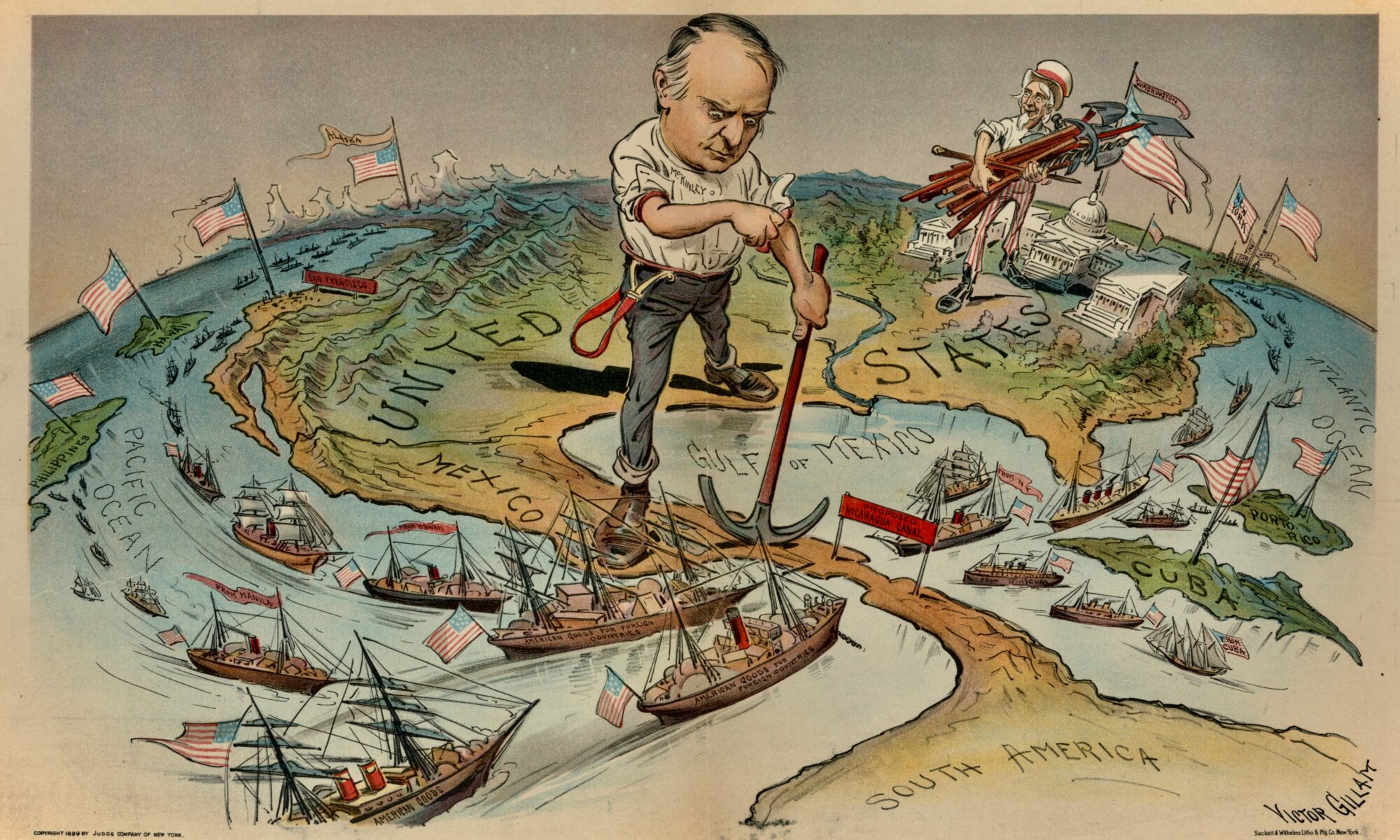
Featured Image source Persuasive Maps: PJ Mode Collection: 1136.01
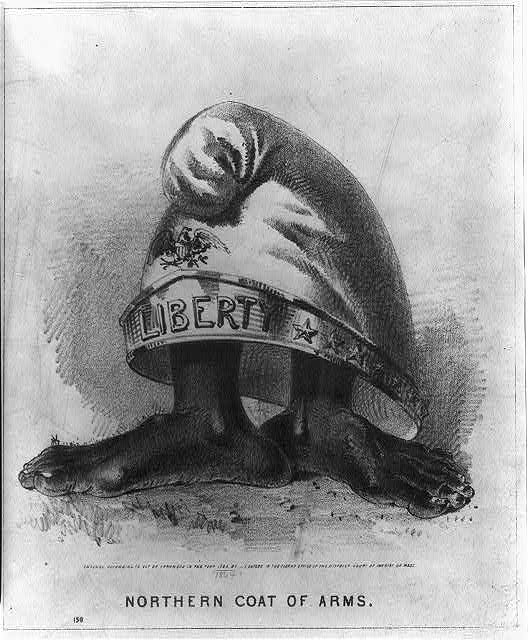
Album Description: This collection of political cartoons from the late 19th and early 20th centuries illustrates the polarized debate over U.S. foreign intervention. From the “Big Stick” of Theodore Roosevelt to anti-imperialist critiques of American expansion, these images reflect the same tensions we see in modern headlines regarding Venezuela.
The 2026 capture of Nicolás Maduro serves as a powerful reminder of the long history of U.S. interventions in the Western Hemisphere. For over a century, the United States has taken direct action in the region for a variety of reasons – ranging from security and stability to self-serving economic and political interests – with results that have been viewed as both beneficial and detrimental. This album invites students to use their historical thinking skills to examine how the visual rhetoric of the past mirrors today’s geopolitical realities, encouraging them to analyze the motivations and consequences of American foreign actions across different eras.
Lesson Plan: Historical Thinking & Foreign Policy
- Grade Level: 9-12 (US History / Government)
- Essential Question: Does the United States have the right to intervene in the affairs of other nations?
- Historical Thinking Skills: Contextualization, Corroboration, and Sourcing.
1. Essential Question
Briefly mention the recent news regarding U.S. military interests and diplomatic pressure in Venezuela. Ask students: “When we see the U.S. getting involved in South America today, are we seeing a new policy, or the continuation of a 120-year-old debate?”
2. Analysis Activity: The “Spectrum of Intervention”
Divide the class into small groups and assign each group 2–3 cartoons from the album. Ask them to analyze the cartoons using the LOC Primary Source Analysis Tool.
The Categorization Task: Students must place their cartoons on a spectrum on the whiteboard/digital board:
- The “Pro-Intervention” Side: Cartoons that depict the U.S. as a “World Constable,” a “Rescuer,” or a “Teacher”.
- The “Anti-Intervention” Side: Cartoons that depict the U.S. as an “Oppressor,” “Greedy,” or “Overburdened”.
3. Analyzing Key Arguments (Corroboration)
Once the cartoons are categorized, have the students identify the core arguments used by the artists.
- Arguments FOR Intervention:
- Maintaining order/stability in the hemisphere.
- Humanitarian duty to “save” people from bad actors/dictators.
- Advancing U.S. economic interests and trade routes.
- Arguments AGAINST Intervention:
- Violation of the “consent of the governed.”
- The high cost (blood and treasure) of empire.
- The hypocrisy of a former colony (the U.S.) becoming a colonizer.
Exit Choice Board: The Venezuela Debate
Instructions: Select one of the following options to demonstrate your understanding of the historical roots of the current U.S. intervention in Venezuela.
Option 1: The Visual/Creative (The “Modern Big Stick”)
- Task: Create a rough sketch or a detailed “visual metaphor” for U.S. foreign policy in 2026.
- Requirement: Your drawing must incorporate at least one specific symbol or “character” found in the historical cartoons.
- The Goal: Show whether you think the 2026 intervention is a “Rescue” or an “Expansion”.
Option 2: The Verbal/Performative (The “60-Second Briefing”)
- Task: Record a one-minute “Voice Memo” or perform a live “Elevator Pitch” to a member of the Senate Foreign Relations Committee.
- Requirement: You must cite one specific historical cartoon from the album to support your stance on the current military strikes.
- The Goal: Use the primary source as a “precedent.” For example: “Senator, we are repeating the mistake shown in the 1899 cartoon ‘School Begins’ by assuming we can ‘teach’ democracy through force…”
Option 3: The Written/Analytical (The “Social Media Fact-Check”)
- Task: Write a “Community Note” or a “Thread” (3 posts) responding to a hypothetical modern headline supporting or opposing the capture of Maduro.
- Requirement: Use two cartoons to show how this debate is not new.
- The Goal: Use the skill of Corroboration. Show how the historical arguments are being echoed (or contradicted) by the arguments used for Operation Absolute Resolve today.
Cartoon Gallery
All the images are available in one PDF. Follow links to high resolution versions for free at the Library of Congress.